Award Recipients
The Live in Motion Foundation is proud to announce the recipients of its 2026 Spring Mentored Pilot Research Grants. Offered twice annually, this one-year grant program supports clinically relevant, investigator-initiated research in orthotics, prosthetics, and pedorthics.
The program provides early career scientists and emerging investigators, including master’s and doctoral students, O&P residents, and practicing clinicians with the funding and mentorship needed to complete a focused research project under the guidance of an experienced research mentor.
Selected projects demonstrate strong scientific merit, clear clinical relevance, and alignment with the Foundation’s research priorities. Through this program, the Live in Motion Foundation aims to strengthen early research skills, foster meaningful mentorship, and generate preliminary data that can support larger-scale funding opportunities, investigator development, and meaningful improvements in patient care.
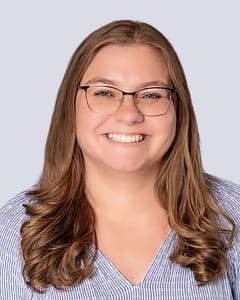
Rebekah Bakken-Gay, MS, is a PhD Candidate in Health Sciences with a concentration in sport and exercise psychology at Texas Christian University (TCU). Her research examines how guided mindfulness, present moment awareness, and self-compassion protocols influence physical activity experiences. Under the dual mentorship of Dr. Robyn Braun-Trocchio, CMPC, and Dr. Graci Finco, CPO, Rebekah is conducting a qualitative investigation exploring the lived experiences of individuals with limb loss and difference. Her work will evaluate how positive psychological resources of mindfulness and self-compassion, coupled with emerging technologies such as virtual and mixed reality, can be leveraged to improve adjustment, quality of life, and functional prosthetic outcomes.
Mindfulness, Self-Compassion, and Technology-Enhanced Interventions in Prosthetic Care: A Qualitative Study
“I am incredibly honored to receive the Spring 2026 Mentored Pilot Grant from The Live in Motion Foundation. I am grateful for the opportunity to extend my research on mindfulness and self-compassion to the orthotics and prosthetics community, gaining crucial qualitative insights into the patient experience. As a PhD candidate, this grant is a vital stepping stone that will accelerate impactful work aimed at improving psychosocial adjustment and making holistic mobility care more accessible. Ultimately, this grant provides me with invaluable clinical experience that ensures the voices of individuals with limb loss and difference are directly heard and integrated into future care.”
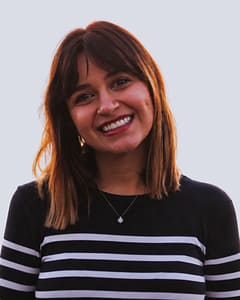
Fateme Eskandarighargheh is a PhD candidate in the Interdisciplinary Health Science PhD Program, School of Integrated Health Sciences, at the University of Nevada, Las Vegas, where she studies the intersection of rehabilitation biomechanics, psychology, neuroscience, and wearable technology.
Trained originally in Iran before continuing her doctoral work in the United States, Fateme brings a global, boundary-crossing perspective to her research; one shaped by the experience of building a career, a home, and an identity in a new country. That experience informs her central conviction: that recovery, whether from amputation or from displacement, is not a return to who a person was, but the deliberate construction of who they are becoming.